

Hey there! As a supplier of submersible mixers, I've gotten a ton of questions about how these nifty devices work, especially when it comes to mixing gas - liquid mixtures. So, in this blog, I'm gonna break down the mixing mechanism of a submersible mixer for gas - liquid mixtures.
Let's start with the basics. A submersible mixer is designed to be submerged in a liquid, and its main job is to create movement and agitation within that liquid. When we're dealing with gas - liquid mixtures, things get a bit more interesting.
The Key Components of a Submersible Mixer
First off, let's talk about the main parts of a submersible mixer. There's the motor, which is the power source. It's usually well - sealed to prevent water from getting in and causing damage. Then there's the impeller. This is like the heart of the mixer. The impeller rotates at high speed, creating a flow of liquid around it.
The shape and design of the impeller are crucial. Different impeller designs can generate different types of flows, such as axial flow (where the liquid moves parallel to the axis of the impeller) or radial flow (where the liquid moves outwards from the center of the impeller). For gas - liquid mixing, an axial - flow impeller is often a good choice because it can effectively draw in the gas and mix it with the liquid.
How the Mixing Happens
When a submersible mixer is placed in a gas - liquid mixture, the rotation of the impeller creates a low - pressure area near the impeller blades. This low - pressure area is key to the mixing process. Gas bubbles in the liquid are attracted to this low - pressure zone.

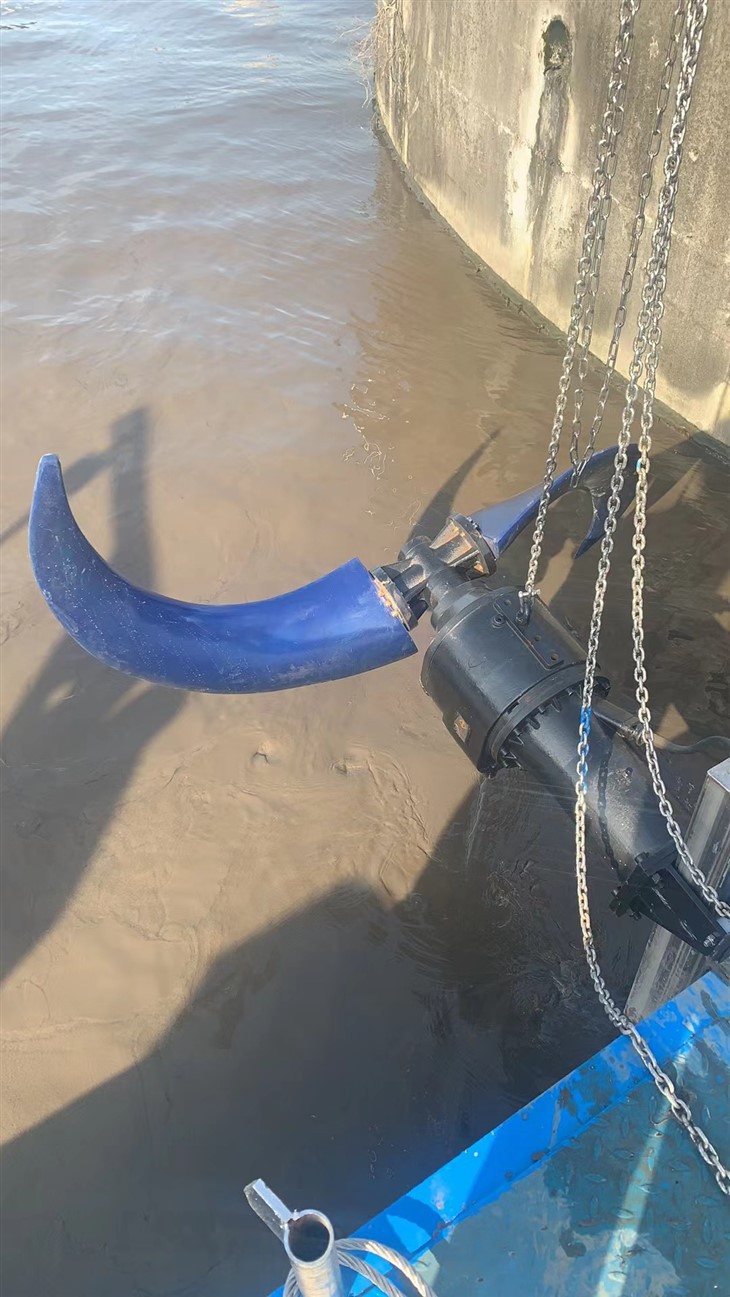
As the impeller continues to spin, it chops up the gas bubbles into smaller ones. Smaller gas bubbles have a larger surface area compared to larger ones. This increased surface area means more contact between the gas and the liquid, which is great for things like chemical reactions or oxygen transfer in wastewater treatment.
The movement of the liquid also helps to distribute the gas bubbles throughout the entire volume of the liquid. The mixer creates a circulation pattern, ensuring that the gas - liquid mixture is well - blended. This circulation can be adjusted depending on the specific requirements of the application.
Applications of Gas - Liquid Mixing with Submersible Mixers
One of the most common applications is in wastewater treatment. In a wastewater treatment plant, submersible mixers are used to mix air (a gas) with the wastewater (a liquid). The oxygen in the air helps the bacteria in the wastewater break down organic matter. This process is called aerobic digestion, and it's a crucial step in cleaning up the water.
Another application is in the chemical industry. When you're producing certain chemicals, you might need to mix a gas with a liquid reactant. A submersible mixer can ensure that the reaction happens evenly and efficiently.
Our Product Range
At our company, we offer a variety of submersible mixers suitable for gas - liquid mixing. For example, our Sludge Return Pump is designed to handle the tough job of moving sludge and mixing it with other substances in a wastewater treatment setting. It can also be used to mix gas - liquid mixtures effectively.
Our Drift Tank Submersible Mixer is another great option. It's specifically designed for drift tanks, where it can create a stable and efficient gas - liquid mixing environment.
And if you're looking for a powerful submersible mixer, check out our Submersible Flow Thruster Qjb. It can generate a strong flow, which is perfect for large - scale gas - liquid mixing applications.
Factors Affecting the Mixing Mechanism
There are several factors that can affect how well a submersible mixer mixes a gas - liquid mixture. One factor is the viscosity of the liquid. If the liquid is very thick or viscous, it can be more difficult for the mixer to create a good flow and mix the gas effectively. In such cases, a more powerful mixer or a different impeller design might be needed.
The gas flow rate also matters. If too much gas is introduced at once, the mixer might not be able to break up the gas bubbles properly, leading to poor mixing. On the other hand, if the gas flow rate is too low, the reaction or process that depends on the gas - liquid mixture might not happen at an optimal rate.
The temperature of the mixture can also have an impact. Some chemical reactions that occur during gas - liquid mixing are temperature - sensitive. The mixer should be able to maintain a consistent temperature distribution within the mixture to ensure the reaction proceeds as expected.
Tips for Optimal Gas - Liquid Mixing
To get the best results from your submersible mixer when mixing gas - liquid mixtures, here are a few tips. First, make sure the mixer is properly sized for the volume of the mixture. A mixer that's too small won't be able to create enough flow and agitation, while a mixer that's too large can be a waste of energy.
Second, choose the right impeller design. As I mentioned earlier, an axial - flow impeller is often a good choice for gas - liquid mixing, but the specific design might need to be adjusted based on the properties of the gas and the liquid.
Finally, monitor the gas flow rate and adjust it as needed. You can use flow meters and other monitoring devices to ensure that the gas is being introduced at the right rate for optimal mixing.
Conclusion
So, there you have it! That's the mixing mechanism of a submersible mixer for gas - liquid mixtures in a nutshell. These mixers are incredibly useful in a wide range of industries, from wastewater treatment to chemical manufacturing.
If you're in the market for a submersible mixer for gas - liquid mixing, we'd love to help. We have a team of experts who can assist you in choosing the right product for your specific needs. Whether you're dealing with a small - scale project or a large industrial application, we've got you covered. Just reach out to us to start the procurement and negotiation process.
References
- Perry, R. H., & Green, D. W. (Eds.). (1997). Perry's Chemical Engineers' Handbook. McGraw - Hill.
- Metcalf & Eddy. (2003). Wastewater Engineering: Treatment and Reuse. McGraw - Hill.


