

Hey there! As a supplier of submerged mixers, I often get asked about the shear force generated by these nifty pieces of equipment. So, let's dive right in and break down what this shear force is all about.
First off, what exactly is shear force in the context of a submerged mixer? Well, shear force is basically the force that acts parallel to a surface. In the case of a submerged mixer, it's the force that the mixer imparts on the fluid it's mixing. When the mixer's impeller rotates, it pushes the fluid around, creating a difference in velocity between adjacent layers of the fluid. This difference in velocity results in a shearing action, and that's where the shear force comes from.
Think of it like this: imagine you're stirring a thick milkshake with a straw. As you twirl the straw, the milkshake near the straw moves faster than the milkshake farther away. That difference in speed creates a kind of pulling or tearing effect between the layers of the milkshake, and that's shear force in action.
Now, why is this shear force important? Well, it plays a crucial role in a lot of applications where submerged mixers are used. For instance, in wastewater treatment plants, shear force helps to break up clumps of sludge and mix chemicals evenly into the water. The Sludge Return Pump often works in conjunction with submerged mixers, and the shear force generated by the mixer can enhance the performance of the pump by ensuring a more homogeneous mixture.
In the food and beverage industry, shear force is used to blend ingredients together. Whether it's mixing flavors into a batch of juice or emulsifying oil and water in a salad dressing, the right amount of shear force can make a big difference in the quality of the final product.
In aquaculture, submerged mixers are used to keep the water oxygenated and prevent the buildup of sediment. The shear force helps to circulate the water, ensuring that oxygen is distributed evenly throughout the tank and that waste products are carried away.
But how do we control the shear force generated by a submerged mixer? There are a few factors that come into play. The design of the impeller is one of the most important factors. Different impeller designs will generate different amounts of shear force. For example, a high - speed, small - diameter impeller will typically generate more shear force than a low - speed, large - diameter impeller.
The speed of the impeller also has a big impact on shear force. The faster the impeller rotates, the greater the difference in velocity between the fluid layers, and the higher the shear force. However, increasing the speed too much can also have negative effects, such as creating excessive turbulence or consuming too much energy.

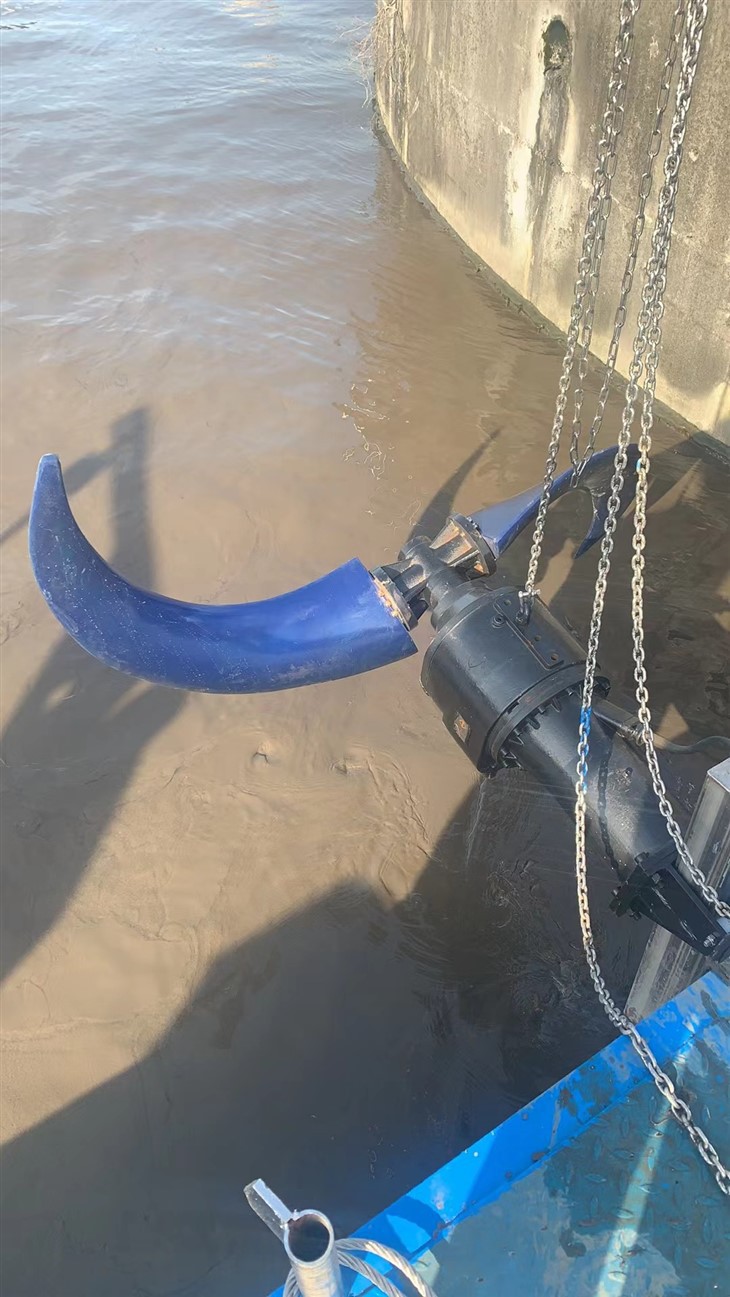
The viscosity of the fluid being mixed is another factor. Thicker, more viscous fluids will require more shear force to mix effectively than thinner fluids. So, when selecting a submerged mixer, it's important to consider the viscosity of the fluid and choose an impeller and speed that will generate the right amount of shear force.
Let's talk a bit more about the different types of submerged mixers and how they relate to shear force. The Submersible Flow Thruster is designed to create a large volume of flow with relatively low shear force. These are great for applications where you need to move a lot of fluid around, like in large water tanks or open channels.
On the other hand, the Submersible Flow Thruster Qjb is engineered to generate a more focused and intense shear force. This makes it ideal for applications where you need to break up tough clumps or mix highly viscous fluids.
When it comes to choosing the right submerged mixer for your application, understanding the shear force requirements is key. You need to think about what you're trying to achieve. Are you looking to blend ingredients, break up solids, or simply circulate the fluid? Once you have a clear idea of your goals, you can select a mixer that will generate the appropriate amount of shear force.
As a supplier, I've seen firsthand the impact that the right submerged mixer can have on a process. Whether it's improving the efficiency of a wastewater treatment plant, enhancing the quality of a food product, or maintaining a healthy aquaculture environment, the right amount of shear force can make all the difference.
If you're in the market for a submerged mixer and you're not sure where to start, don't worry. We're here to help. Our team of experts can work with you to understand your specific needs and recommend the best mixer for your application. We offer a wide range of submerged mixers, each designed to generate the right amount of shear force for different tasks.
Whether you're dealing with a small - scale project or a large - scale industrial operation, we have the solution for you. So, if you're interested in learning more about our submerged mixers or have any questions about shear force and how it relates to your application, reach out to us. We'd love to have a chat and see how we can help you take your process to the next level.
In conclusion, shear force is a fundamental concept when it comes to submerged mixers. It's the force that makes these mixers so effective in a wide range of applications. By understanding how shear force works and how to control it, you can choose the right submerged mixer for your needs and ensure optimal performance. So, don't hesitate to get in touch and start the conversation about finding the perfect mixer for your project.
References:
- Fluid Mechanics textbooks for general knowledge on shear force and fluid flow.
- Industry reports on wastewater treatment, food and beverage processing, and aquaculture for application - specific information on submerged mixers.
