

Hey there! As a supplier of vertical pumps, I've been getting a lot of questions lately about the relationship between the speed of a vertical pump and its performance. So, I thought I'd sit down and write a little something to clear things up.
First off, let's talk about what a vertical pump is. A vertical pump is a type of centrifugal pump that's designed to move fluids vertically. It's commonly used in a variety of applications, from water treatment to industrial processes. The pump works by using an impeller to create a centrifugal force that moves the fluid through the pump and out of the discharge port.
Now, let's get into the nitty - gritty of how speed affects the performance of a vertical pump.
Flow Rate
One of the most significant ways that speed impacts a vertical pump's performance is through the flow rate. The flow rate is basically how much fluid the pump can move in a given amount of time. As the speed of the pump increases, the flow rate also increases. This is because the impeller spins faster, creating a stronger centrifugal force that can push more fluid through the pump.
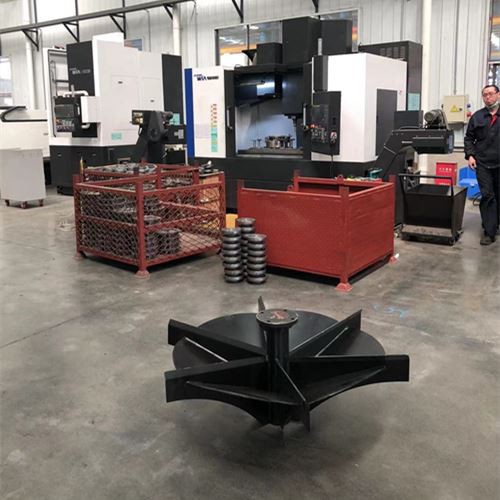

For example, if you have a vertical pump running at a low speed, it might only be able to move a small amount of water per minute. But if you increase the speed, the pump can move a much larger volume of water in the same amount of time. This is crucial in applications where you need to move a large quantity of fluid quickly, like in a sewage treatment plant. Check out our Vertical Pump Aerators for more information on pumps designed for high - flow applications.
Head Pressure
Another important aspect of pump performance is head pressure. Head pressure refers to the force that the pump can generate to push the fluid up against gravity or through a system of pipes and valves. As the speed of the vertical pump goes up, the head pressure also increases.
When the impeller spins faster, it can impart more energy to the fluid. This extra energy allows the fluid to overcome greater resistance, whether it's the height it needs to be lifted or the friction in the pipes. In a water supply system, for instance, a higher head pressure means that the pump can supply water to higher floors of a building. However, it's important to note that there are limits. If you increase the speed too much, the pump might start to experience cavitation, which can damage the impeller and reduce the pump's efficiency.
Power Consumption
You might be thinking, "If increasing the speed gives better performance, why not just run the pump at full speed all the time?" Well, here's the catch: power consumption. As the speed of the vertical pump increases, so does the power it consumes. Running a pump at a high speed for an extended period can lead to significantly higher electricity bills.
It's a balancing act. You need to find the right speed that gives you the performance you need while keeping power consumption in check. In some cases, you might be able to use a variable - speed drive (VSD) to adjust the pump speed according to the actual demand. This way, you can save energy when the full performance of the pump isn't required.
Efficiency
Efficiency is another key factor affected by pump speed. A pump operates most efficiently at a certain speed, known as the best efficiency point (BEP). When the pump runs at or near the BEP, it can convert the electrical energy it consumes into hydraulic energy (the energy of the moving fluid) with the least amount of loss.
If the speed is too low or too high compared to the BEP, the pump's efficiency drops. At low speeds, the impeller might not be able to create enough centrifugal force to move the fluid effectively, and at high speeds, factors like cavitation and increased internal friction can reduce efficiency. So, it's essential to select a pump with a speed range that matches your application requirements to ensure optimal efficiency.
Applications
Let's take a look at some real - world applications to see how the speed - performance relationship plays out.
In aquaculture, vertical pumps are often used for aeration. Paddle Wheel Aerator Solar and Deep Water Aeration Mixer are examples of equipment that rely on pumps for proper functioning. In this context, the speed of the pump can affect the amount of oxygen that gets dissolved in the water. A higher - speed pump can create more turbulence, which helps in better oxygen transfer. But again, you need to balance the speed to avoid stressing the fish or other aquatic organisms in the pond.
In industrial processes, such as chemical manufacturing, vertical pumps are used to transfer various fluids. The speed of the pump needs to be carefully controlled to ensure accurate dosing and mixing of chemicals. If the speed is too high, it might cause splashing or uneven mixing, while a too - low speed could result in incomplete transfer.
Selecting the Right Speed
So, how do you select the right speed for your vertical pump? It all starts with understanding your application requirements. You need to know the required flow rate, head pressure, and the nature of the fluid you're pumping.
If you're unsure, it's always a good idea to consult with a pump expert. They can help you analyze your system and recommend the best pump and speed settings. At our company, we have a team of experienced professionals who can assist you in making the right choice.
Customization
We understand that every application is unique, and that's why we offer customization options for our vertical pumps. Whether you need a pump with a specific speed range or other special features, we can work with you to design a solution that meets your exact needs.
If you're in the market for a vertical pump and want to learn more about how speed affects performance, or if you're ready to discuss your specific requirements, don't hesitate to reach out. Our team is here to help you make an informed decision and ensure that you get the best - performing pump for your application.
In conclusion, the speed of a vertical pump has a profound impact on its performance in terms of flow rate, head pressure, power consumption, and efficiency. By understanding this relationship and carefully selecting the right speed, you can optimize the operation of your pump and save on costs in the long run.
So, if you're looking for a reliable vertical pump supplier, we're here for you. Let's have a chat about your project and find the perfect pump solution together.
References
- "Centrifugal Pumps: Design and Application" by Heinz P. Bloch and Allan R. Budris.
- "Pump Handbook" by Igor J. Karassik, Joseph P. Messina, Paul Cooper, and Charles C. Heald.


