

Hey there! As a supplier of the QJB Submersible Mixer, I often get asked about the installation height of this nifty piece of equipment in a tank. So, I thought I'd sit down and write this blog to share some insights on this topic.
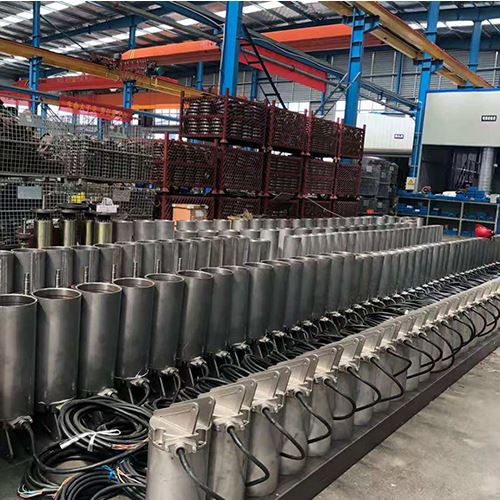
First off, let's talk a bit about the QJB Submersible Mixer itself. It's a powerful and efficient device that's widely used in various industries, especially in sewage treatment and water treatment plants. This mixer helps to keep the liquid in the tank well - mixed, preventing sedimentation and ensuring that chemical reactions occur evenly. You can learn more about it on our website QJB Submersible Mixer.
Now, getting to the main point – the installation height. The installation height of the QJB Submersible Mixer in a tank isn't a one - size - fits - all deal. It depends on several factors, and we'll go through each of them one by one.
Tank Size and Shape
The size and shape of the tank play a huge role in determining the installation height. In a small, rectangular tank, the mixer can usually be installed closer to the bottom. This is because the liquid flow in a small tank is relatively easier to control. For example, if you have a tank that's only 2 - 3 meters deep and has a simple rectangular shape, installing the mixer about 0.5 - 1 meter from the bottom can create a good mixing effect.
On the other hand, in a large, irregularly shaped tank, things get a bit more complicated. A large circular tank might require the mixer to be installed at a different height compared to a rectangular one. The reason is that the flow patterns in a circular tank are more complex. You might need to install the mixer at a height that allows it to create a circular flow pattern that covers the entire tank. In some large circular tanks, the mixer could be installed around 1.5 - 2 meters from the bottom, but this can vary depending on the specific dimensions of the tank.

Liquid Characteristics
The type of liquid in the tank also matters a great deal. If you're dealing with a low - viscosity liquid, like water, the mixer can be installed at a relatively lower height. Water is easy to mix, and the mixer can create a good flow even when it's closer to the bottom. For instance, in a water storage tank, the QJB Submersible Mixer can be installed about 0.3 - 0.8 meters from the bottom.
However, if the liquid has a high viscosity, such as a thick sludge or a liquid with a lot of suspended solids, the installation height needs to be adjusted. A high - viscosity liquid requires more energy to mix, and installing the mixer at a slightly higher height can help it to create a stronger flow that can penetrate through the thick liquid. In a sludge treatment tank, for example, you might want to install the mixer around 1 - 1.5 meters from the bottom.
Mixing Objectives
What you want to achieve with the mixing process also affects the installation height. If your goal is to simply prevent sedimentation, a lower installation height might be sufficient. The mixer can push the settled particles back into the liquid and keep them in suspension.
But if you're aiming for a more thorough mixing, like in a chemical reaction tank where you need to ensure that all the reactants are evenly mixed, you might need to install the mixer at a height that creates a more widespread flow. In a chemical mixing tank, the mixer could be installed at a height that allows it to create a vertical and horizontal flow pattern that reaches all corners of the tank.
Comparison with Other Mixers
It's also interesting to compare the QJB Submersible Mixer with other types of mixers in terms of installation height. Take the Hyperboloid Mixer for example. Hyperboloid mixers are often used in large - scale water treatment facilities. They usually have a different installation height requirement compared to the QJB Submersible Mixer. Hyperboloid mixers are designed to create a large - scale, gentle flow, and they might be installed at a higher position in the tank to cover a larger area.
The Submersible Flow Thruster is another type of mixer. Submersible flow thrusters are mainly used to create a directed flow in the tank. Their installation height can also be different from the QJB Submersible Mixer. They are often installed at a height that allows them to direct the flow towards a specific area of the tank.
Practical Tips for Installation
When you're actually installing the QJB Submersible Mixer, here are some practical tips. First, make sure to follow the manufacturer's instructions carefully. These instructions are based on a lot of research and testing, and they can give you a good starting point for the installation height.
Second, do a test run. Before you finalize the installation height, it's a good idea to run the mixer at different heights and observe the mixing effect. You can use visual inspection or even some simple measurement tools to see how well the liquid is being mixed.
Finally, keep in mind that you might need to make adjustments over time. As the tank conditions change, such as the liquid level or the type of liquid being treated, you might need to change the installation height of the mixer to maintain an optimal mixing effect.
Conclusion
So, as you can see, the installation height of the QJB Submersible Mixer in a tank is a complex but important consideration. It depends on factors like tank size and shape, liquid characteristics, and mixing objectives. By understanding these factors and following the practical tips, you can ensure that your QJB Submersible Mixer works at its best.
If you're in the market for a QJB Submersible Mixer or have any questions about its installation height or other aspects, don't hesitate to reach out. We're here to help you make the right choice for your specific needs. Whether you're running a small sewage treatment plant or a large industrial facility, we've got the expertise to assist you.
References
- Industry standards for submersible mixers
- Manufacturer's technical documentation for QJB Submersible Mixer
- Research papers on liquid mixing in tanks
