

What explosion - proof requirements should a Push Flow Aerator meet in a hazardous area?
As a supplier of Push Flow Aerators, I understand the critical importance of ensuring that our equipment meets the highest safety standards, especially when it comes to operating in hazardous areas. Hazardous areas are locations where flammable gases, vapors, dusts, or fibers may be present in the air, creating a risk of explosion. In such environments, a Push Flow Aerator must adhere to specific explosion - proof requirements to prevent potential disasters.
1. Understanding Hazardous Areas Classification
Before delving into the explosion - proof requirements, it is essential to understand the classification of hazardous areas. Hazardous areas are typically classified into zones based on the frequency and duration of the presence of flammable substances.
In the case of gas and vapor - filled hazardous areas, there are three main zones:
- Zone 0: An area in which an explosive gas atmosphere is present continuously or for long periods.
- Zone 1: An area in which an explosive gas atmosphere is likely to occur in normal operation.
- Zone 2: An area in which an explosive gas atmosphere is not likely to occur in normal operation and, if it occurs, will exist only for a short time.
For dust - filled hazardous areas, the zones are classified as:
- Zone 20: An area in which an explosive dust atmosphere in the form of a cloud is present continuously or for long periods.
- Zone 21: An area in which an explosive dust atmosphere in the form of a cloud is likely to occur in normal operation.
- Zone 22: An area in which an explosive dust atmosphere in the form of a cloud is not likely to occur in normal operation and, if it occurs, will exist only for a short time.
The classification of the hazardous area where the Push Flow Aerator will be installed determines the level of explosion - proof protection required.
2. Explosion - Proof Protection Concepts
2.1 Intrinsic Safety (Ex i)
Intrinsic safety is a widely used explosion - proof concept for electrical equipment in hazardous areas. The principle behind intrinsic safety is to limit the electrical energy in the equipment to a level that is insufficient to ignite the surrounding explosive atmosphere.
For a Push Flow Aerator, if it has electrical components such as motors or control systems, they can be designed to be intrinsically safe. This involves using low - power circuits, carefully selecting components with appropriate power ratings, and implementing protective barriers to prevent excessive energy from being released. Intrinsic safety is suitable for Zone 0, Zone 1, and Zone 2 gas - filled hazardous areas and Zone 20, Zone 21, and Zone 22 dust - filled hazardous areas.
2.2 Flameproof Enclosure (Ex d)
A flameproof enclosure is a robust housing that can withstand an internal explosion without allowing the flame or hot gases to escape and ignite the surrounding explosive atmosphere. The enclosure is designed to contain the explosion within it and cool the hot gases before they can reach the outside.
The Push Flow Aerator's electrical components, such as the motor, can be housed in a flameproof enclosure. The enclosure must be constructed with appropriate materials and have proper sealing to ensure its integrity. Flameproof enclosures are commonly used in Zone 1 and Zone 2 gas - filled hazardous areas.
2.3 Increased Safety (Ex e)
Increased safety is a concept that aims to prevent the occurrence of potential ignition sources by using additional safety measures in the design and construction of electrical equipment. This includes measures such as improved insulation, better protection against overheating, and more reliable connection systems.
For a Push Flow Aerator, increased safety can be applied to the electrical wiring, terminals, and other non - arcing components. It is mainly used in Zone 1 and Zone 2 gas - filled hazardous areas.
3. Material Selection for Explosion - Proof Push Flow Aerators
The materials used in the construction of a Push Flow Aerator in a hazardous area are crucial for its explosion - proof performance.
3.1 Non - Sparking Materials
To prevent the generation of sparks that could ignite the explosive atmosphere, non - sparking materials should be used for components that may come into contact with each other or with the surrounding environment. For example, the impellers of the Push Flow Aerator can be made of non - sparking plastics or special alloys that have low friction and do not generate sparks when rubbed against other materials.
3.2 Corrosion - Resistant Materials
In many hazardous areas, the environment may be corrosive due to the presence of chemicals or moisture. Corrosion can weaken the structural integrity of the Push Flow Aerator and compromise its explosion - proof performance. Therefore, corrosion - resistant materials such as stainless steel or coated metals should be used for the construction of the aerator's housing, frame, and other components.
4. Testing and Certification
To ensure that a Push Flow Aerator meets the explosion - proof requirements, it must undergo rigorous testing and obtain relevant certifications.
4.1 Testing Procedures
The testing of a Push Flow Aerator for explosion - proof performance typically includes tests such as temperature rise tests, short - circuit tests, and impact tests. These tests are designed to verify that the aerator can operate safely in the specified hazardous area without generating ignition sources.
For example, in a temperature rise test, the aerator is operated under normal and abnormal conditions to measure the temperature of its components. If the temperature exceeds the allowable limit, it may indicate a potential ignition source.
4.2 Certification Bodies
There are several international and national certification bodies that issue explosion - proof certifications for equipment. Some well - known certification bodies include ATEX (for Europe), UL (for the United States), and IECEx (for international standards). A Push Flow Aerator that has obtained certifications from these bodies demonstrates its compliance with the relevant explosion - proof standards.
5. Installation and Maintenance Requirements
Proper installation and maintenance are essential for the safe operation of a Push Flow Aerator in a hazardous area.
5.1 Installation
During the installation process, the Push Flow Aerator must be installed in accordance with the manufacturer's instructions and the relevant safety standards. This includes ensuring proper grounding, correct wiring, and appropriate positioning of the aerator in the hazardous area.
For example, the aerator should be installed at a safe distance from potential sources of ignition and in a location where it can operate efficiently without being exposed to excessive mechanical stress or environmental hazards.
5.2 Maintenance
Regular maintenance is necessary to keep the Push Flow Aerator in good working condition and to ensure its continued explosion - proof performance. Maintenance tasks may include inspection of the electrical components, cleaning of the impellers, and checking the integrity of the explosion - proof enclosure.
Any damaged or worn - out components should be replaced immediately with certified explosion - proof parts to maintain the safety of the aerator.
6. Our Product Offerings and Advantages
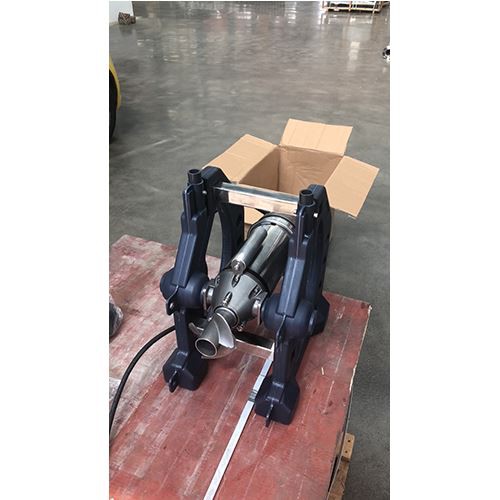
As a Push Flow Aerator supplier, we offer a range of explosion - proof Push Flow Aerators that are designed to meet the specific requirements of different hazardous areas.
Our Push Flow Aerators are equipped with advanced explosion - proof technologies, such as intrinsic safety and flameproof enclosures, to ensure maximum safety. We use high - quality non - sparking and corrosion - resistant materials in the construction of our aerators, which not only improve their explosion - proof performance but also extend their service life.
In addition to our standard Push Flow Aerators, we also offer customized solutions to meet the unique needs of our customers. Whether you need a large - scale aerator for a wastewater treatment plant in a hazardous area or a compact aerator for a small - scale industrial application, we can provide you with the right product.
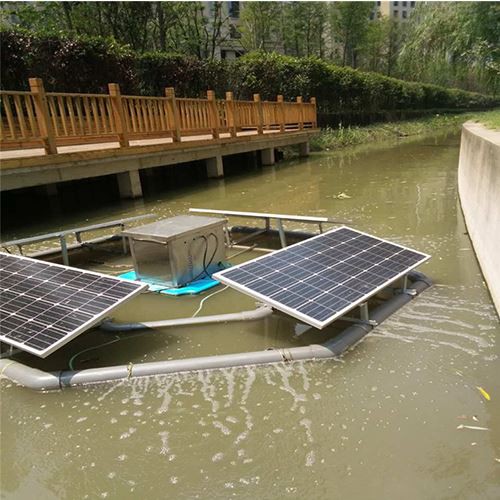
We also offer related products such as Large Flow Aerator, Micro and Nano Bubble Generator, and Solar De - Layer Aerator, which can be used in combination with our Push Flow Aerators to improve the overall water treatment efficiency in hazardous areas.
If you are looking for a reliable and explosion - proof Push Flow Aerator for your hazardous area application, please feel free to contact us for more information and to discuss your specific requirements. Our team of experts is ready to provide you with professional advice and support to help you make the right choice.
References
- IEC 60079 series of standards on explosive atmospheres.
- ATEX Directive 2014/34/EU for equipment and protective systems intended for use in potentially explosive atmospheres.
- UL 913 Standard for Intrinsically Safe Apparatus and Associated Apparatus for Use in Class I, II, and III, Divisions 1 and 2, Hazardous (Classified) Locations.
