

When it comes to wastewater treatment, industrial processes, or any application that requires thorough mixing of liquids in a tank, submersible mixers play a crucial role. As a submersible mixer supplier, I often receive inquiries from customers about how to calculate the power needed for a submersible mixer in a specific tank. In this blog post, I will guide you through the process, providing you with a step-by-step approach to ensure you select the right mixer with the appropriate power for your needs.
Understanding the Basics of Submersible Mixers
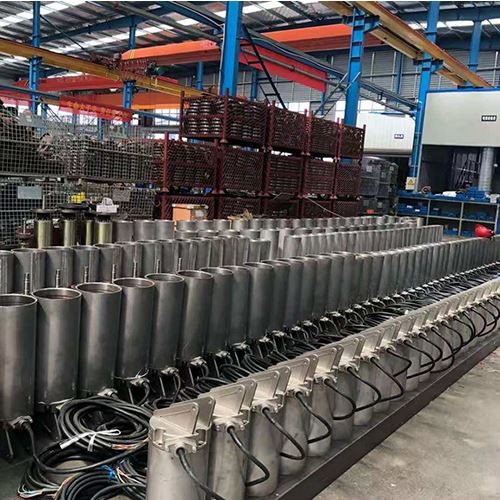
Before diving into the power calculation, it's essential to understand what submersible mixers are and how they work. Submersible mixers are designed to be fully submerged in the liquid they are mixing. They consist of a motor, a shaft, and an impeller. The motor drives the impeller, which creates a flow pattern in the liquid, ensuring uniform mixing.
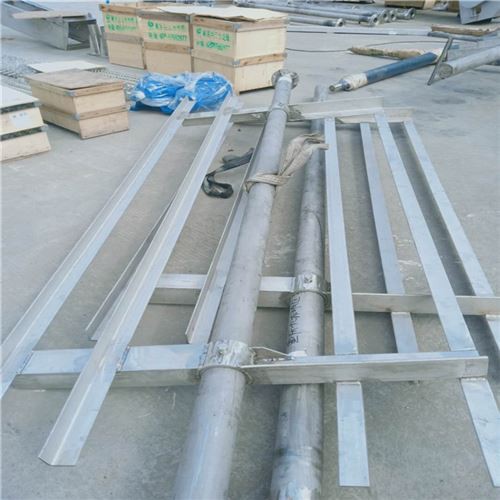
There are different types of submersible mixers available, each suitable for specific applications. For example, the Paddle Mixer is ideal for gentle mixing in large tanks, while the QJB Submersible Mixer is known for its high efficiency and is commonly used in wastewater treatment plants. The Frame Mixer is suitable for applications where a more robust mixing solution is required.
Factors Affecting the Power Requirement
Several factors influence the power needed for a submersible mixer in a specific tank. Understanding these factors is crucial for an accurate power calculation.
1. Tank Dimensions
The size and shape of the tank have a significant impact on the power requirement. Larger tanks generally require more powerful mixers to ensure proper mixing. The depth of the tank is also important, as deeper tanks may need mixers with higher thrust to reach the bottom and create a uniform flow.
2. Liquid Properties
The properties of the liquid being mixed, such as density, viscosity, and temperature, affect the power requirement. More viscous liquids require more power to mix compared to less viscous ones. Similarly, liquids with higher densities may also demand more power.
3. Mixing Objectives
The purpose of mixing also plays a role in determining the power needed. For example, if the goal is to achieve a high degree of homogenization, a more powerful mixer may be required compared to a situation where gentle mixing is sufficient.
4. Impeller Type and Size
The type and size of the impeller used in the mixer can significantly affect the power consumption. Different impeller designs create different flow patterns and have varying efficiencies. Larger impellers generally require more power to operate but can create stronger flows.
Step-by-Step Power Calculation
Now that we understand the factors affecting the power requirement, let's go through the step-by-step process of calculating the power needed for a submersible mixer in a specific tank.
Step 1: Determine the Tank Volume
The first step is to calculate the volume of the tank. For a rectangular tank, the volume can be calculated using the formula:
[V = L \times W \times H]
where (V) is the volume, (L) is the length, (W) is the width, and (H) is the height of the tank.
For a cylindrical tank, the volume formula is:
[V=\pi r^{2}h]
where (r) is the radius of the tank and (h) is the height.
Step 2: Analyze the Liquid Properties
Determine the density ((\rho)) and viscosity ((\mu)) of the liquid being mixed. These properties can usually be found in technical data sheets or can be measured in a laboratory.
Step 3: Define the Mixing Intensity
Based on your mixing objectives, define the required mixing intensity. This can be expressed in terms of the minimum velocity or the degree of homogenization required.
Step 4: Select the Impeller Type and Size
Choose an appropriate impeller type and size based on the tank dimensions, liquid properties, and mixing objectives. Different impellers have different performance characteristics, so it's important to select the one that best suits your needs.
Step 5: Use Power Calculation Formulas
There are several empirical formulas available for calculating the power requirement of a submersible mixer. One commonly used formula is the power number method:
[P = N_{p}\rho n^{3}D^{5}]
where (P) is the power requirement, (N_{p}) is the power number (which depends on the impeller type and Reynolds number), (\rho) is the liquid density, (n) is the impeller speed in revolutions per second, and (D) is the impeller diameter.
The Reynolds number ((Re)) can be calculated using the formula:
[Re=\frac{\rho nD^{2}}{\mu}]
The power number ((N_{p})) can be obtained from impeller performance charts or empirical data.
Step 6: Consider Safety Factors
It's important to consider safety factors when calculating the power requirement. Unforeseen changes in liquid properties, tank conditions, or mixing requirements may occur over time. A safety factor of 1.2 - 1.5 is commonly applied to the calculated power to ensure reliable operation.
Example Calculation
Let's consider an example to illustrate the power calculation process. Suppose we have a rectangular tank with dimensions (L = 5m), (W = 3m), and (H = 2m). The liquid being mixed has a density of (\rho = 1000kg/m^{3}) and a viscosity of (\mu = 0.001 Pa\cdot s). We want to achieve a moderate mixing intensity, and we select a propeller impeller with a diameter (D = 0.5m) and a speed of (n = 2 rps).
First, calculate the tank volume:
[V = L\times W\times H=5\times3\times2 = 30m^{3}]
Next, calculate the Reynolds number:
[Re=\frac{\rho nD^{2}}{\mu}=\frac{1000\times2\times(0.5)^{2}}{0.001}=500000]
From the impeller performance chart, for a propeller impeller at this Reynolds number, the power number (N_{p}=0.3).
Now, calculate the power requirement using the power number method:
[P = N_{p}\rho n^{3}D^{5}=0.3\times1000\times(2)^{3}\times(0.5)^{5}=37.5W]
Applying a safety factor of 1.2, the final power requirement is (P_{final}=1.2\times37.5 = 45W)
Conclusion
Calculating the power needed for a submersible mixer in a specific tank is a complex process that requires careful consideration of several factors. By following the step-by-step approach outlined in this blog post, you can ensure that you select the right mixer with the appropriate power for your application.
As a submersible mixer supplier, I am here to assist you in making the right choice. If you have any questions or need further guidance on calculating the power requirement or selecting the appropriate submersible mixer, please feel free to contact me. Our team of experts is ready to help you find the best solution for your mixing needs. Whether you are in the wastewater treatment industry, chemical processing, or any other field that requires efficient mixing, we have the products and knowledge to support you.
References
- McCabe, W. L., Smith, J. C., & Harriott, P. (2005). Unit Operations of Chemical Engineering. McGraw-Hill.
- Perry, R. H., & Green, D. W. (1997). Perry's Chemical Engineers' Handbook. McGraw-Hill.


