

Do solar fountain aerators affect the pH level of the water? This is a question that often comes up among pond owners, aquaculturists, and environmental enthusiasts. As a supplier of high - quality solar fountain aerators, including the Center Water Column Fountain Aerator, Micro and Nano Bubble Generator, and Solar Push Flow Aerator, I've delved deep into this topic to provide you with accurate and detailed information.
Understanding pH in Water
Before we explore the relationship between solar fountain aerators and water pH, it's essential to understand what pH is. pH is a measure of the acidity or alkalinity of a solution. It ranges from 0 to 14, with 7 being neutral. A pH below 7 indicates acidic water, while a pH above 7 means the water is alkaline.
In natural water bodies such as ponds, lakes, and aquariums, maintaining an appropriate pH level is crucial. Different aquatic organisms have specific pH requirements for survival, growth, and reproduction. For example, most freshwater fish thrive in water with a pH between 6.5 and 7.5. Deviations from this range can stress the fish, make them more susceptible to diseases, and even lead to death in extreme cases.
How Solar Fountain Aerators Work
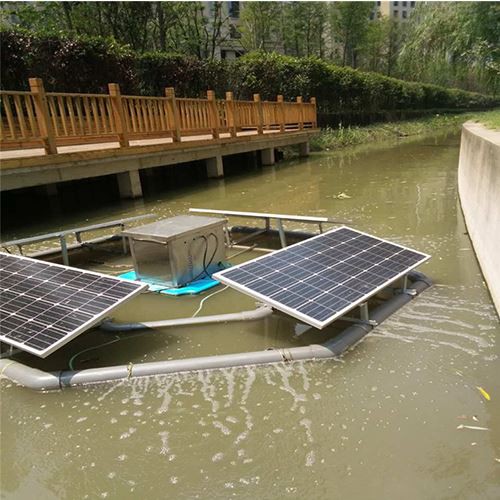
Solar fountain aerators are devices that use solar energy to pump water and introduce air into a water body. They typically consist of a solar panel, a pump, and an aeration mechanism. The solar panel captures sunlight and converts it into electricity, which powers the pump. The pump then draws water from the water body and either sprays it into the air or releases it through a diffuser to create bubbles.
The main function of solar fountain aerators is to increase the dissolved oxygen (DO) content in the water. Oxygen is essential for the survival of aquatic life. Fish, invertebrates, and beneficial bacteria all need oxygen to respire. Additionally, higher DO levels can help break down organic matter in the water, reducing the buildup of harmful substances such as ammonia and hydrogen sulfide.
The Potential Impact on pH
The relationship between solar fountain aerators and water pH is complex and can be influenced by several factors.
1. Carbon Dioxide Exchange
One of the primary ways solar fountain aerators can affect pH is through carbon dioxide (CO₂) exchange. When water is aerated, the surface area of the water exposed to the air increases. This promotes the exchange of gases between the water and the atmosphere.
Carbon dioxide is present in water as a result of the respiration of aquatic organisms and the decomposition of organic matter. Aeration can cause CO₂ to escape from the water into the atmosphere. As CO₂ leaves the water, the following chemical reaction occurs:

[H_2CO_3\rightleftharpoons H^++ HCO_3^-]
When CO₂ is removed, the equilibrium shifts to the left, reducing the concentration of hydrogen ions ((H^+)) in the water. Since pH is a measure of the hydrogen ion concentration ((pH =-\log[H^+])), a decrease in (H^+) concentration leads to an increase in pH. In other words, aeration can make the water more alkaline.
2. Algal Activity
Solar fountain aerators can also influence the activity of algae in the water. Algae are photosynthetic organisms that consume CO₂ and release oxygen during the day. When aeration increases the DO levels in the water, it can potentially stimulate algal growth.
During the day, as algae photosynthesize, they remove CO₂ from the water, which can cause the pH to rise. However, at night, algae respire and release CO₂, which can lower the pH. The overall effect of algal activity on pH depends on the balance between photosynthesis and respiration, as well as the amount of algae present in the water.
3. Water Mixing
Solar fountain aerators create water movement and mixing. This can help distribute dissolved substances more evenly throughout the water column. In some cases, water at different depths may have different pH levels due to variations in chemical composition and biological activity. Mixing the water can bring these different layers together, resulting in a more uniform pH throughout the water body.
Case Studies and Research Findings
Several studies have investigated the impact of aeration on water pH. In a study conducted on a small pond, researchers found that the use of a solar fountain aerator increased the dissolved oxygen levels from 2 mg/L to 6 mg/L. Concurrently, the pH of the water increased from 6.8 to 7.2 over a period of several weeks.
Another research project focused on aquaculture ponds. The results showed that continuous aeration using a solar - powered aerator helped maintain a relatively stable pH level, preventing drastic fluctuations that could be harmful to the fish. The aeration also reduced the occurrence of low - pH events caused by the decomposition of organic matter at the bottom of the pond.
Practical Considerations for Pond Owners
If you own a pond or an aquarium and are considering using a solar fountain aerator, here are some practical tips regarding pH management:
1. Monitor pH Regularly
Invest in a reliable pH testing kit and test the water regularly, especially when you first install the aerator. This will help you track any changes in pH and take appropriate action if necessary.
2. Adjust Aeration Intensity
If you notice that the pH is rising too high, you can reduce the aeration intensity. This can be done by adjusting the flow rate of the aerator or reducing the operating time. On the other hand, if the pH is too low, increasing the aeration may help raise it.
3. Consider the Overall Ecosystem
Remember that the pH of the water is just one aspect of the overall ecosystem. Other factors such as temperature, nutrient levels, and the presence of other chemicals can also affect the health of your aquatic organisms. Make sure to maintain a balanced ecosystem by controlling the amount of organic matter input, providing appropriate filtration, and choosing compatible aquatic species.
Our Solar Fountain Aerators and pH Management
As a supplier of solar fountain aerators, we understand the importance of pH management in water bodies. Our Center Water Column Fountain Aerator is designed to provide efficient aeration while minimizing the impact on pH. It creates a beautiful water column that not only enhances the aesthetic appeal of the pond but also promotes gentle aeration and gas exchange.
The Micro and Nano Bubble Generator is another innovative product in our lineup. Micro and nano - bubbles have a large surface - to - volume ratio, which allows for more efficient gas transfer. This can help increase the DO levels in the water without causing significant pH fluctuations.
Our Solar Push Flow Aerator is ideal for larger water bodies. It creates a gentle push flow that helps circulate the water and distribute oxygen evenly. This can contribute to a more stable pH environment throughout the water body.
Conclusion
In conclusion, solar fountain aerators can have an impact on the pH level of water. Through carbon dioxide exchange, algal activity, and water mixing, they can either increase or maintain the pH within a certain range. However, the actual effect depends on various factors, and careful monitoring and management are required to ensure the optimal health of the aquatic ecosystem.
If you are interested in learning more about our solar fountain aerators or have questions about pH management in your water body, we encourage you to contact us for a detailed discussion. Our team of experts is ready to assist you in selecting the right product for your specific needs and providing guidance on installation and operation.
References
- Boyd, C. E., & Tucker, C. S. (1998). Water quality in ponds for aquaculture. Kluwer Academic Publishers.
- Cooke, G. D., Welch, E. B., Peterson, S. A., & Newroth, P. (2005). Restoration and management of lakes and reservoirs. CRC Press.
- Wetzel, R. G. (2001). Limnology: Lake and river ecosystems. Academic Press.


